Stormwater 101: Where Rain Goes After It Hits Pavement
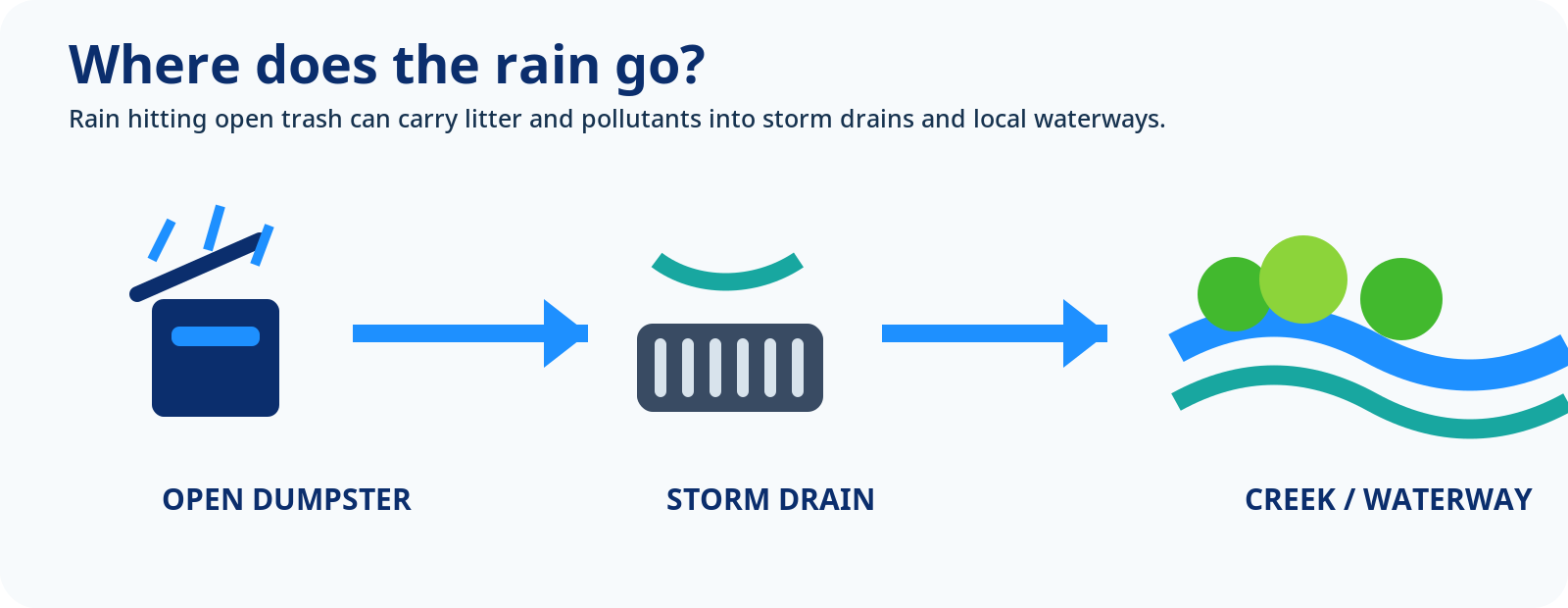
Stormwater is different from sewage. In many communities, water that runs off roofs, parking lots, streets, loading areas and commercial properties enters a storm-drain system that may discharge to local waterways with little or no treatment.
Why that matters
Rain can pick up material already on the ground or exposed outdoors, including loose trash, food residue, sediment, oil and vehicle fluids, cleaning chemicals, landscaping debris and material leaking from poorly maintained waste areas.
A storm drain is not a trash can
Keeping pollutants out of stormwater is easier than removing them later. Five simple actions help:
- Keep lids and gates closed when possible.
- Pick up loose trash before wind or rain moves it.
- Do not wash waste-area residue into the street or storm drain.
- Report active leaks, spills or damaged containers.
- Keep the area around dumpsters and recycling containers maintained.
Why dumpsters matter
A dumpster is not automatically a pollution source. Risk increases when waste, liquids, rain exposure, damaged containers, overflowing material or poor housekeeping create a pathway for pollutants to leave the site.
Residents can report obvious pollution and support education. Businesses can improve housekeeping and maintenance. Sponsors can support community programs and education. Cities can connect people to local stormwater resources.
Educational material only. Local rules vary. Follow your local agency’s requirements and emergency procedures.