ADOPT-A-DUMPSTER™ VOLUNTEER ACADEMY · TOPIC 1 OF 8 · APPROX. 7 MINUTES
Lesson 1 — Why Dumpster Areas Matter
A commercial dumpster area is part of a property's daily operation. Containers can be safe and well managed, but rain, overflowing material, loose litter or drainage connections can create potential maintenance and water-quality concerns. A volunteer documents visible conditions; they do not diagnose a legal violation.
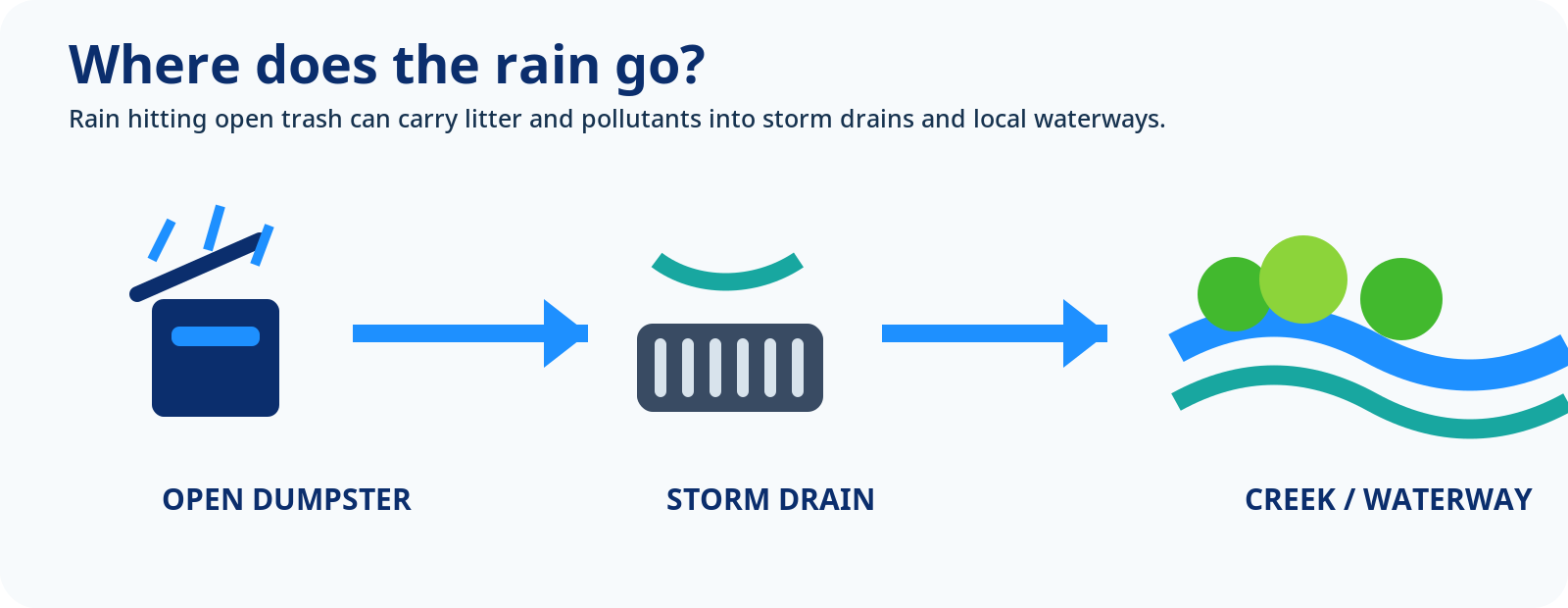
How stormwater moves
Rain on roofs and pavement often enters municipal drains. Treatment and discharge conditions vary by location, so a volunteer should describe the visible pathway instead of assuming every drain discharges untreated into a creek.
Where trash-area exposure may occur
Open lids, loose material, wet cardboard and visibly damaged containers can create opportunities for contact between rainfall and waste. These are observations, not proof of water pollution.
Why location quality matters
Location and context help staff identify a unique enclosure and avoid duplicate claims. Exact submitted positions remain private during review.
Practice: what would you do?
You see a covered dumpster with the lids closed and dry surrounding pavement. Make an objective observation; do not mark it a problem simply because there is a dumpster nearby.
Check your understanding
Open each question to check the recommended answer. These informal self-checks do not award a grade, qualification, points or certificate.
1. Does seeing a dumpster prove pollution?
Learning feedback: No. A container's presence does not establish a discharge or legal violation.
2. Can you claim a specific storm drain is untreated without evidence?
Learning feedback: No. Describe what you actually observe and let qualified reviewers establish further facts.
3. What is the mapper's first responsibility?
Learning feedback: Safety and accurate, neutral documentation.
Continue learning
Educational observations are not legal findings. Do not trespass, touch waste or publish private property information.