ADOPT-A-DUMPSTER™ · WET TRASH 101 · CLEANUP
What Should Never Be Hosed Into a Storm Drain?
A hose can make a pad look cleaner while moving the same residue somewhere it should not go.
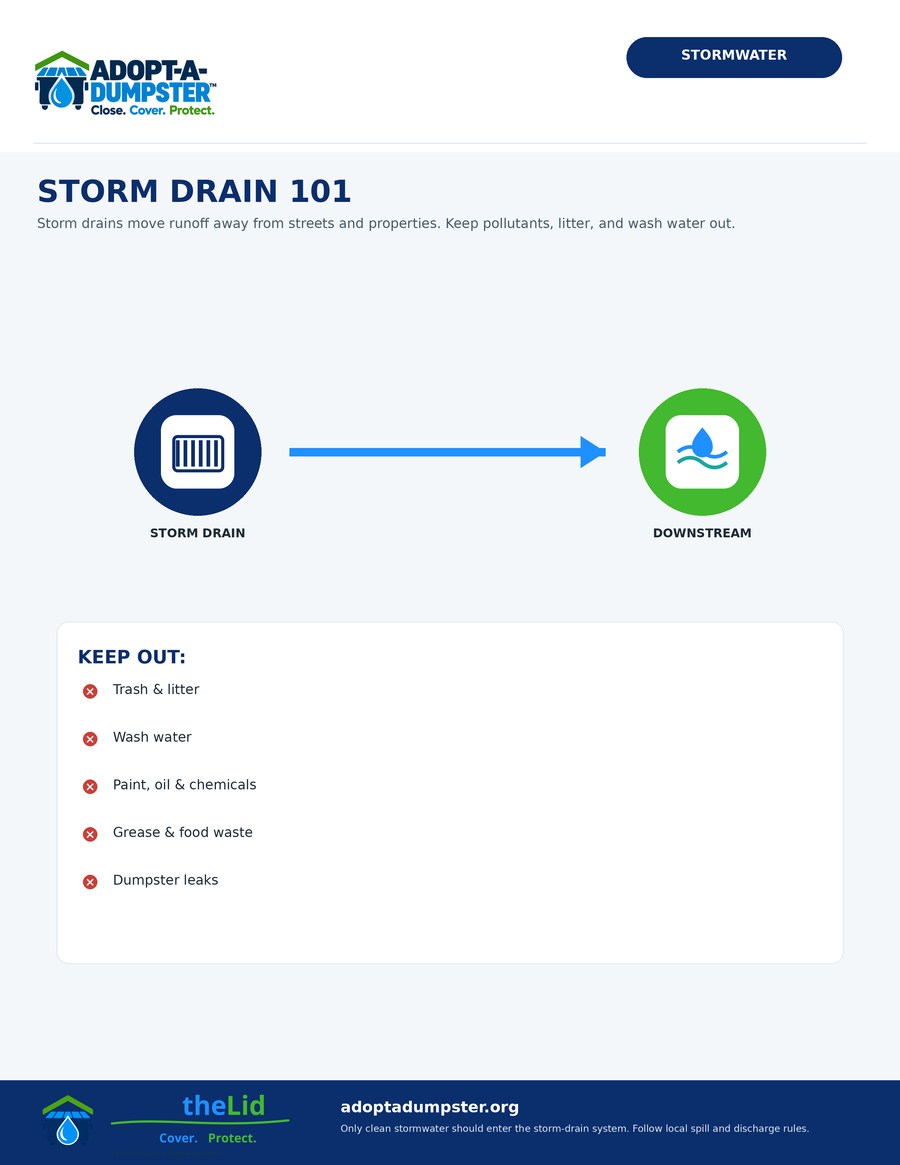
Dry cleanup first
Stormwater BMP guidance repeatedly favors sweeping, pickup and absorbents for waste areas. If washing is necessary, wash water should be collected or routed appropriately rather than allowed to run into the street or storm drain.
Why this matters
Commercial pavement can hold food residue, grease, sediment, vehicle fluids, litter and other pollutants. Hosing does not eliminate those materials; it mobilizes them.
Better cleanup sequence
- Pick up litter and large debris.
- Sweep or vacuum dry residue.
- Use absorbent material on grease or liquid spills.
- If washing is required, block storm-drain pathways and collect the wash water.
- Dispose of collected water through an approved route for the local system.
Local rules matter
Sanitary-sewer acceptance varies by jurisdiction. Property teams should follow the local sewer authority and municipal stormwater requirements.
Sources & further reading
- CASQA – SC-34 Waste Handling & Disposal
- San Diego Regional Water Board – Municipal Storm Water Permit FAQ
These sources support the general education on this page. Site-specific legal requirements still depend on the applicable permit, ordinance and local system.